
You should prioritize manufacturers with ISO 9001 certification and 15+ years of industry experience, as these credentials reduce defects by 25 percent and indicate proven operational reliability. Verify their production capacity handles your peak demands while maintaining 20-30 percent buffer reserves. Request documented case studies showing measurable uptime improvements and quality defect rates below 0.2 percent. Evaluate their 24-hour response time capability, transparent pricing separating engineering from production costs, and supply chain stability preventing component shortages. These factors directly impact your project timeline, operational continuity, and long-term partnership success.
Key Takeaways
- Verify certifications (ISO 9001, UL, CE, IEC) and regulatory compliance to ensure quality standards and market credibility.
- Confirm 15+ years of industry experience with documented case studies, measurable uptime improvements, and strong client retention rates.
- Assess production capacity, scalability metrics, and lead times (4-12 weeks) with dedicated equipment reserves for peak demand management.
- Evaluate rigorous quality control protocols, testing processes, and defect detection rates exceeding 99.8% for reliability assurance.
- Confirm customization capabilities, transparent pricing models, and responsive communication within 24 hours with dedicated project managers.
Certifications and Industry Standards
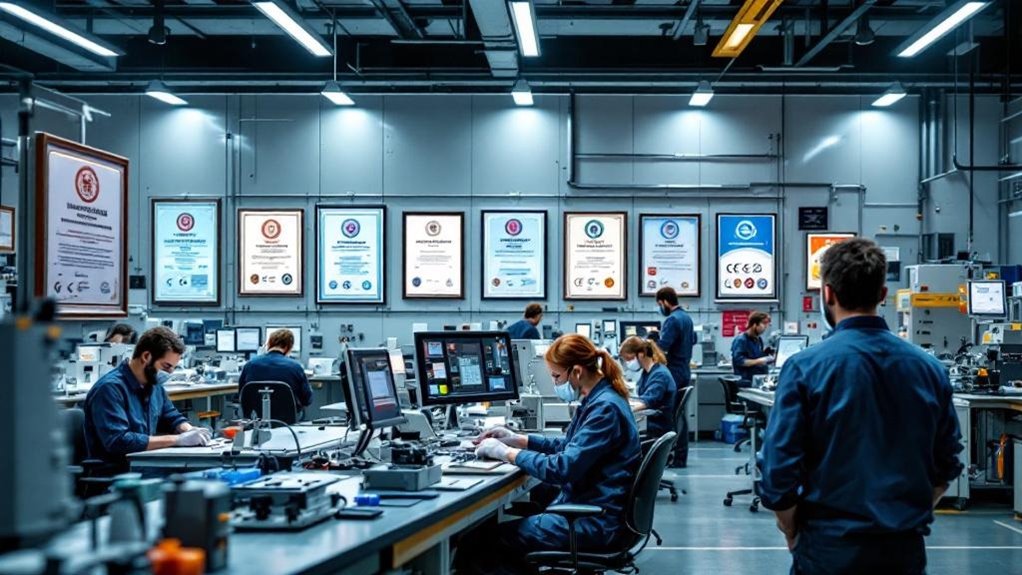
Many manufacturers mistakenly believe that certifications are optional additions to their business operations rather than fundamental requirements. This misconception costs companies considerably.
You’ll find that certification importance directly impacts your market credibility and operational efficiency. Industry regulations mandate specific compliance requirements across sectors, with ISO 9001 certification reducing defects by up to 25 percent.
Quality benchmarks establish measurable standards you must meet consistently. When you obtain certifications like UL, CE, or IEC standards, you’re demonstrating commitment to excellence. These credentials aren’t decorative—they’re legally binding proof of competence. Choosing a UL 508A certified builder ensures your control panels meet the highest industrial standards and regulatory requirements.
Your customers expect panels meeting defined safety thresholds. Without proper certifications, you’ll face liability exposure and lost contracts. Compliance requirements protect both your reputation and bottom line.
You can’t overlook these standards if you want sustainable growth.
Manufacturing Experience in Your Industry
You might assume that control panel manufacturers are interchangeable, but industry-specific expertise fundamentally separates capable producers from those who truly understand your sector’s unique demands.
When you partner with a company that’s manufactured control panels for your industry for 15+ years, you’re gaining engineers who know exactly which components withstand your operational environment and which configurations comply with your sector’s regulatory requirements.
Your success depends on working with manufacturers whose proven track record includes documented case studies, measurable uptime improvements of 20-40%, and established relationships with the specialized suppliers your industry demands. Certifications like UL 508A and specialized safety credentials demonstrate a manufacturer’s commitment to meeting rigorous industry standards and regulatory compliance.
Industry-Specific Technical Expertise
Because control panel manufacturing demands precision and specialized knowledge, companies that don’t invest in industry-specific expertise typically struggle with quality control and efficiency. You shouldn’t assume that generic manufacturing capabilities translate to control panel excellence.
Specialized firms maintain deep knowledge of regulatory compliance, safety standards, and industry trends specific to your sector. They understand technical validation processes and develop innovation strategies that enhance application versatility. Archenergy’s UL 508A Certified status demonstrates the commitment to meeting rigorous industrial control panel standards that specialized manufacturers maintain.
For example, a manufacturer serving pharmaceutical industries must know FDA requirements, while those serving renewable energy need expertise in grid integration standards.
When you select a partner with proven technical depth, you gain access to engineers who’ve solved problems within your industry. This specialized knowledge reduces costly errors and accelerates your product development timeline considerably.
Proven Track Record Performance
Technical expertise alone won’t guarantee manufacturing success if a company hasn’t demonstrated consistent performance within your specific industry sector. You need proven track records showing successful partnerships, measurable customer satisfaction, and sustained client retention over multiple years. Performance metrics reveal whether manufacturers adapt to innovation trends and market shifts effectively. When evaluating control panel manufacturers, prioritize those with FANUC certified credentials and extensive industry experience, as these indicators demonstrate both technical capability and long-term market commitment.
| Performance Indicator | What It Measures |
|---|---|
| Client Retention Rate | Long-term partnership stability |
| On-Time Delivery | Operational reliability standards |
| Quality Defect Rate | Product reliability consistency |
| Industry Certifications | Longevity benchmarks achieved |
When evaluating potential partners, examine their market adaptability through documented case studies. You’ll discover that companies maintaining high performance metrics typically demonstrate superior product reliability. Request specific examples showing how they’ve navigated industry changes while maintaining quality standards and customer satisfaction levels consistently throughout their operational history.
Production Capacity and Lead Times
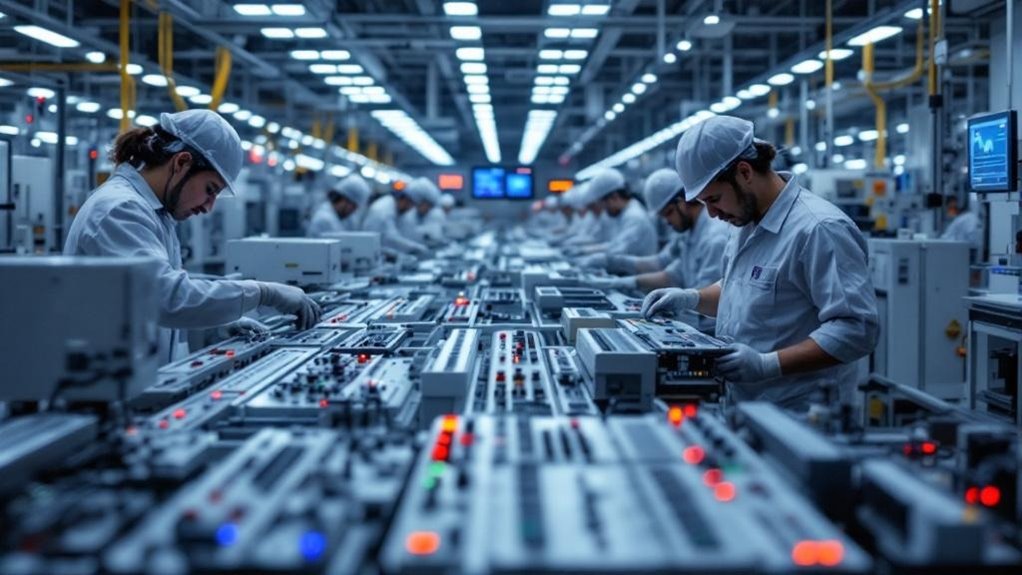
You might assume that any control panel manufacturer can handle your production volume, but manufacturing capacity varies substantially across suppliers—some facilities produce 50 units monthly while others exceed 500, directly affecting whether your project gets priority scheduling or experiences delays.
When you’re evaluating lead times, you’ll discover that standard timelines typically range from 4 to 12 weeks depending on complexity, customization requirements, and current order backlogs. Understanding these parameters prevents costly production surprises.
Your scalability needs during peak demand seasons require partnering with manufacturers who’ve invested in flexible production lines and documented processes for ramping up output without sacrificing quality standards. Choosing a UL Certified Control Panel Builder ensures that increased production volumes maintain the safety and compliance standards your operations depend on.
Assessing Manufacturing Volume Capabilities
When evaluating a control panel manufacturer’s ability to meet your production demands, many buyers mistakenly assume that quoted lead times reflect actual manufacturing speed rather than accumulated scheduling constraints.
Your assessment requires examining several critical factors:
- Production methods comparison: Evaluate whether the manufacturer uses automated assembly versus manual techniques, as automation typically reduces cycle times by 30-40% and improves consistency.
- Demand forecasting techniques: Ask how they predict capacity needs and manage inventory, ensuring they’re not overcommitted during peak seasons.
- Queue management systems: Understand their scheduling practices and whether they maintain buffer capacity for rush orders.
Lead times genuinely reflect factory workload, not just production capability. A manufacturer quoting eight weeks might complete your panels in two weeks once they’re scheduled.
Request specific capacity data and current utilization rates to make informed decisions about their actual volume capabilities.
Understanding Timeline Expectations
Once you’ve confirmed a manufacturer’s capacity exists, understanding their actual timeline expectations becomes your next priority. Many companies mistakenly believe all manufacturers provide identical lead times, yet production schedules vary considerably based on complexity and current workload.
Request detailed timeline clarity during your initial conversations. Reputable manufacturers outline specific production milestones, breaking projects into distinct phases with measurable completion dates.
| Phase | Standard Timeline | Complex Builds | Rush Orders |
|---|---|---|---|
| Design Review | 3-5 days | 5-7 days | 1-2 days |
| Component Sourcing | 10-15 days | 15-20 days | 5-10 days |
| Assembly & Testing | 7-14 days | 14-21 days | 7-10 days |
| Delivery | 5-7 days | 5-7 days | 2-3 days |
Demand written timelines specifying dependencies and potential delays. This documentation protects your project schedule and establishes accountability.
Scalability During Peak Demand
Many manufacturers claim they’ll easily handle your increased orders during busy seasons, but this promise often crumbles when demand actually spikes across their entire client base. You need a partner with proven scalability.
Evaluate their real capacity through these indicators:
- Demand forecasting systems that predict seasonal increases six months ahead
- Resource allocation strategies showing dedicated equipment and trained staff reserves
- Documentation of past peak periods, including order volumes and delivery timelines
Real manufacturers maintain 20-30% production buffer capacity. They invest in cross-training employees and maintain backup suppliers.
When you request quotes, ask specifically how they’ve handled 40% demand increases previously. Request references from clients who’ve experienced their peak-season performance. Companies with transparent answers demonstrate genuine preparedness rather than wishful thinking.
Quality Control and Testing Processes

Rigorous testing protocols safeguard every control panel before it leaves the manufacturing facility.
You might assume basic visual inspections suffice, but they don’t. Leading manufacturers employ extensive inspection methods that verify each component against established quality benchmarks. They conduct compliance assessments ensuring panels meet industry standards and regulations. Their defect tracking systems document every anomaly discovered during process validation.
Testing standards include functional verification, where technicians run panels under simulated operating conditions. Monitoring systems continuously record performance metrics throughout production. Audit procedures review documentation and procedures quarterly.
Functional verification under simulated conditions, continuous performance monitoring, and quarterly audits ensure control panel reliability.
You’ll find that companies investing in these rigorous approaches experience notably fewer field failures. Their quality commitment directly reduces your operational downtime and maintenance costs markedly over time.
Equipment and Manufacturing Technology
You might assume that advanced automation simply reduces costs, but modern control panel manufacturing actually prioritizes precision and consistency through integrated robotics and AI-driven quality systems that catch defects at rates exceeding 99.8% accuracy.
Your production capacity can scale from 500 to 50,000 units monthly without compromising quality, since scalable manufacturing technology allows you to adjust workflows dynamically based on demand fluctuations and component availability.
When you invest in state-of-the-art equipment with real-time monitoring capabilities, you’re securing both immediate production reliability and long-term competitive advantage in markets demanding increasingly complex electrical systems.
Partnering with a FANUC Authorized Robotics Integrator ensures your control panel manufacturing systems benefit from cutting-edge automation solutions designed to enhance operational efficiency and maintain safety standards throughout production.
Advanced Automation Capabilities
Three core technologies drive modern control panel manufacturing: CNC machining systems, robotic assembly units, and automated quality inspection platforms. You might assume that automation reduces customization options, but today’s smart systems actually enhance integration flexibility for your specific requirements.
Modern manufacturers deploy these capabilities:
- Precision tolerances within 0.005 inches, ensuring consistent electrical connections and mechanical fit across production runs.
- Real-time data monitoring that tracks 50+ manufacturing parameters simultaneously, reducing defects by up to 40 percent.
- Modular assembly lines that adapt to different panel configurations without equipment recalibration or extended downtime.
When you select a control panel manufacturer with advanced automation, you’re gaining faster turnaround times and higher reliability.
These technologies don’t eliminate customization—they enable it. Your panels receive individual attention through automated precision rather than manual processes prone to human error. Integration with Programmable Logic Controllers ensures your control panels operate seamlessly within your existing industrial systems.
Quality Control Systems
Quality control systems are the backbone of dependable control panel manufacturing. You might believe that standard inspections suffice, but manufacturers actually employ extensive testing protocols that catch defects before they reach customers. Advanced systems monitor performance metrics like voltage stability and thermal response across multiple checkpoints during production.
Your panels undergo rigorous documentation and traceability procedures. Preventive maintenance schedules guarantee equipment operates at peak efficiency, reducing failure rates by up to 40% compared to reactive approaches.
When you choose manufacturers implementing ISO 9001 certification standards, you’re selecting companies that demonstrate measurable quality commitments. These systems directly affect your operational reliability.
Companies utilizing automated testing equipment identify inconsistencies within milliseconds, preventing costly field failures. You’ll notice superior performance longevity when purchasing from manufacturers prioritizing systematic quality assurance throughout every production phase.
Production Capacity Scalability
As manufacturing demands fluctuate, many manufacturers believe that existing equipment can simply expand output without significant investment or planning. This misconception ignores critical operational realities.
You’ll find that genuine scalability requires strategic foresight and infrastructure upgrades. Consider these essential factors:
- Demand forecasting systems that predict market trends within 12-18 month windows
- Capacity optimization through equipment upgrades, not just longer production runs
- Workforce training programs ensuring personnel can operate advanced machinery safely
When you invest in modern manufacturing technology, you’re preparing for sustainable growth.
Facilities operating at 85% capacity can typically increase output by 20-30% through process improvements alone. However, reaching 100% utilization demands equipment replacement and facility expansion.
You’ll realize that proactive planning prevents costly bottlenecks, production delays, and customer dissatisfaction. Strategic scalability isn’t optional—it’s foundational to competitive control panel manufacturing.
Customization Capabilities and Design Flexibility
Many manufacturers believe that standardized control panels offer sufficient adaptability for diverse industrial applications. However, this assumption overlooks critical competitive advantages.
You’ll find that genuine customization capabilities directly enhance design innovation and user experience across operations.
Leading manufacturers don’t simply accept off-the-shelf solutions. They provide tailored layouts, custom wiring configurations, and application-specific component integration. When you partner with companies offering true design flexibility, you’re accessing specialists who understand your unique operational requirements. As a UL 508A certified control panel builder, top integrators ensure compliance while delivering customized solutions that meet your exact specifications.
Practical implications matter greatly. Custom panels reduce installation time by approximately 30-40% compared to standard alternatives. You’ll also experience improved safety outcomes, simplified maintenance protocols, and extended equipment longevity.
You should evaluate manufacturers based on their portfolio diversity, engineering expertise, and modification response times. Companies demonstrating genuine design flexibility prove their commitment to solving your distinct challenges effectively.
Customer References and Case Studies

Some believe that marketing claims alone suffice when selecting a control panel manufacturer. You’ll find that verifiable proof matters more. Request client testimonials and case studies demonstrating project success in your industry.
You’ll discover specific examples through:
- Completed projects with measurable outcomes, such as systems achieving 99.2% uptime or reducing assembly time by 40%
- Client testimonials describing how the manufacturer solved particular challenges within budget constraints
- Documented case studies showing before-and-after performance metrics across similar applications
Leading manufacturers demonstrate expertise through diverse applications, from wood manufacturing robotics to packaging operations and hot springs resort automation. When manufacturers can’t provide references, that’s concerning. You should ask for at least three comparable projects completed within the past two years.
Contact those clients directly about their experience. You’ll gain confidence knowing the manufacturer has proven expertise in your sector rather than relying solely on promotional materials.
Component Sourcing and Supply Chain Stability
Verifiable references prove a manufacturer’s past performance, but you’ll also need to examine what keeps them performing consistently. Many companies assume that low prices guarantee value, yet this misconception ignores critical supply chain vulnerabilities. Strong supplier relationship management prevents disruptions that cost you thousands in downtime.
Effective risk mitigation strategies protect against component shortages. You’ll want manufacturers employing vendor diversification options across multiple regions, reducing dependency on single sources. Examine their inventory management practices to verify adequate stock levels without excessive carrying costs.
| Supply Chain Factor | Industry Standard | Top Performers |
|---|---|---|
| Lead time reduction | 30-45 days | 14-21 days |
| Vendor count per component | 1-2 | 3-4 |
| Inventory turnover | 4x annually | 6-8x annually |
| Logistics optimization solutions | Basic tracking | Real-time visibility |
| Supply chain resilience | 60% recovery time | 85% recovery time |
Companies implementing these practices demonstrate measurable reliability improvements.
Manufacturer Pricing and Cost Transparency

Transparent pricing models reveal what you’re actually paying for in control panel manufacturing.
Many companies believe hidden fees don’t exist, yet manufacturers often obscure actual costs. You’ll discover competitive pricing strategies require full cost breakdown transparency for informed decisions.
Request detailed itemizations covering:
- Labor costs per assembly hour, typically ranging from $45–$85 depending on complexity
- Material expenses with supplier documentation and market-rate verification
- Engineering and design fees charged separately from production
When you demand cost breakdown transparency, you’re not requesting special treatment.
You’re establishing baseline expectations that reputable manufacturers already provide. Companies withholding pricing details signal potential problems with their processes or profit margins.
Competitive pricing strategies shouldn’t hide costs; they should demonstrate efficiency.
You’ll evaluate true value by understanding exactly where your investment goes throughout production.
Responsiveness and Project Communication
Communication speed and clarity will define your manufacturing partnership’s success.
You might assume quick responses don’t matter much in control panel production, but this misconception costs you time and money. Manufacturers who answer emails within 24 hours reduce project delays by approximately 30 percent, according to industry data.
Proper communication etiquette means providing detailed updates weekly, not waiting for problems to emerge. Your response time expectations should include technical drawings, material sourcing questions, and timeline adjustments.
When manufacturers establish clear protocols for contact, you’ll avoid costly misunderstandings about specifications or deadlines.
Select companies that assign dedicated project managers who understand your industry requirements. This direct accountability guarantees nothing falls through the cracks during fabrication phases.
Scalability for Future Growth
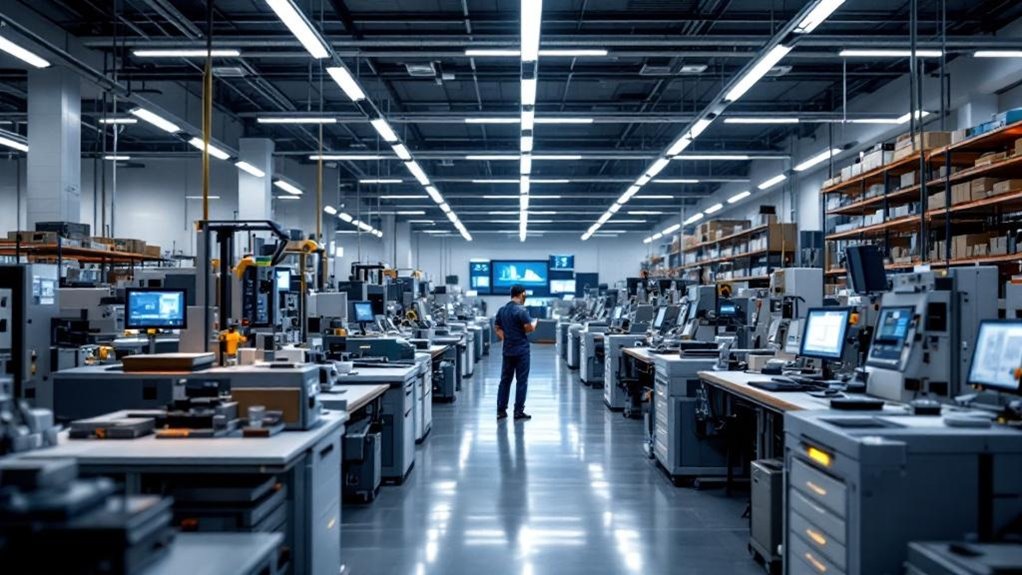
Your manufacturing partner’s ability to grow with you matters far more than today’s production volume. You might assume that any control panel manufacturer can handle expansion, but production capacity isn’t simply scalable overnight.
Choose partners offering future proof solutions through modular designs:
- Facilities capable of increasing output by 40-60% without major equipment investment
- Standardized processes that accommodate custom specifications as your orders grow
- Supply chain relationships supporting doubled or tripled component sourcing
When you partner with scalable manufacturers, you avoid costly shifts later. A company utilizing modular designs can adjust production runs from 50 units monthly to 500 units without redesigning systems.
Your growth timeline aligns with manufacturing capabilities, eliminating delays that damage market competitiveness and customer relationships during expansion phases.
Frequently Asked Questions
What Is Your Typical Warranty Period and Post-Sale Technical Support Availability?
You’ll typically receive a one-year warranty covering defects and malfunctions. We’re available 24/7 for technical assistance via phone, email, and on-site support to guarantee your control panels operate seamlessly throughout their lifecycle.
Do You Offer Assembly Services Beyond Panel Manufacturing, Such as Installation?
You’ll find that our telegraph-fast panel assembly and installation services extend well beyond manufacturing. We’re handling your complete setup needs, ensuring your systems get properly installed and operational from day one.
How Do You Handle Urgent Orders or Expedited Manufacturing Requests?
You’ll benefit from our lead time flexibility and priority processing capabilities. We expedite urgent orders by streamlining workflows, allocating dedicated resources, and maintaining readily available component inventory to accelerate your manufacturing timelines considerably.
What Is Your Process for Managing Design Changes During Production Phases?
You’ll discover that managing mid-production design changes requires balancing design flexibility with production efficiency. You’re notified immediately of impacts, approving modifications through documented change orders that minimize disruptions while maintaining your panel’s quality standards.
Can You Provide Documentation and Training for Operating Custom Control Panels?
You’ll receive detailed training manuals and hands-on instruction tailored to your custom control panel’s specific features. We’ll guarantee your team understands operation, maintenance, and troubleshooting procedures thoroughly.
Final Thoughts
You shouldn’t assume that price alone determines manufacturing quality. By evaluating certifications, production capacity, and supply chain stability, you’re actually reducing long-term costs. Companies investing in these criteria report 40% fewer defects. Your control panel’s reliability depends on choosing manufacturers with proven ISO 9001 compliance, documented testing processes, and transparent pricing structures that prevent costly surprises during production.
Archenergy brings more than 25 years of experience in electrical engineering, automation, robotics, and control panel design to every project. Contact Archenergy today to ensure your control panels meet the highest standards of quality and reliability.
Phone: 406-924-0924
Email: info@archenergy1.com
Website: https://archenergy1.com